
How are you with heavy weights? Are you a super athlete or an average person who prefers a walk to the shops rather than a hike up a mountain?
I’m probably right in assuming that most people are not super athletes and don’t climb mountains. It’s you that this will speak to most. The few super fit, athletic type won’t get my illustration.
Have you ever tried out one of those huge rucksacks? The enormous ones – you know the type. They seem to stretch from the back of the neck down to your bottom. Filled with multiple compartments and, if stuffed to capacity, they are extremely heavy. I’ve seen programmes on TV where someone unfamiliar with their weight has slung one over their shoulders and fallen backwards. Got the picture of the type of rucksack? A rucksack that’s designed for serious, long distant hiking/camping.
Now you need to imagine that rucksack represents a new and sudden illness. It comes upon you and the weight of it can sometimes knock you off your feet. Like a great weight dropped onto you, flattening you.
Over time, most people will adjust to the weight. Even ones who fell over will eventually make some adjustment to the weight. Get used to it. We are very adaptable as humans. The weight/illness hasn’t gone. The pain, sickness, all the limitations haven’t disappeared. We merely find a way to cope, day by day. That can be very exhausting, mentally and physically.
It would be hard enough if things stopped there. But most illnesses and diseases progress over time.
In my illustration, imagine that someone keeps adding things to that already very heavy rucksack. Cans and pans are hooked on. Bit by bit, day by day, the weight is increased. In the real-world, illness, pain, limitations, nausea, and other symptoms increase or fresh ones arrive. Because it happens slowly and a small amount at a time, most disabled and long-term ill people adjust. But that in no way means it’s easy.
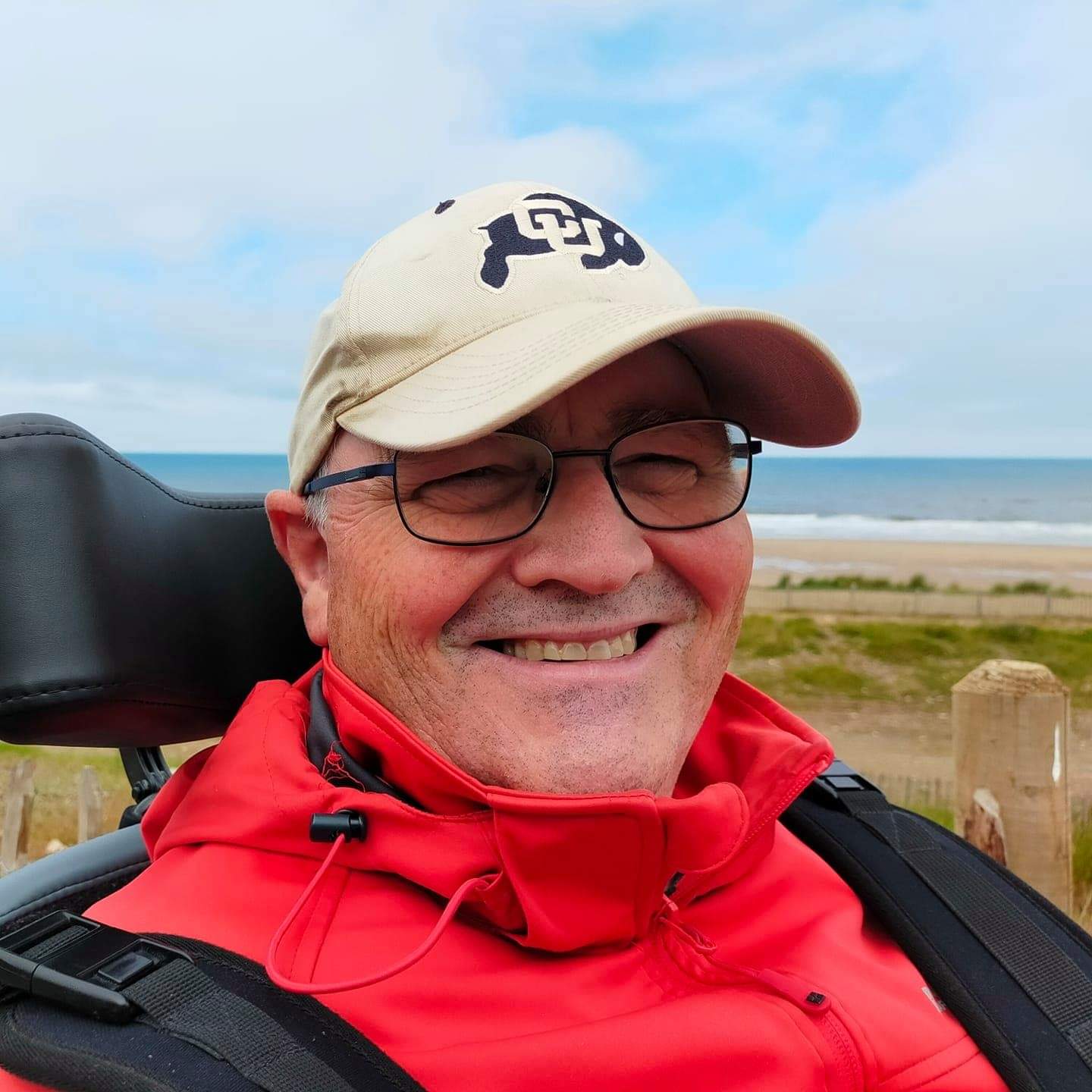
On the outside of this situation, looking in at me, for instance, many people tell me how well I look. I’ve heard that described by my fellow ‘wheelies,’ as an ableist comment. But I think the comment comes from a lack of knowledge – hence this blog. How can anyone understand what I, or anyone else, is experiencing just by looking from outside?
There are the occasional days and times when it all becomes too much. You just want to collapse, give up. But most of the time, you struggle on. To some degree, meeting someone you always have a choice. Be true to how you’re feeling, or put on a mask. Most of us wear masks when we are being sociable. Adrenaline helps us smile and joke.
But slowly, day by day, week by week, month by month, year by year, additional weights keep coming. To some degree, anything added slowly is easier to adjust to, but still takes energy and resources to cope with. Over the years, you become more drained. But most of us keep going.
Now imagine that the massive, heavy rucksack was removed and given immediately to someone who had not had the time to adjust. This very heavy, overladen rucksack. I’m talking about giving it to an ordinary person. Not some super athlete. They would be flattened. They would also realise the pain, difficulty, and degree of illness that the person who has been bearing that load is under every day.
The fact that someone who has a long-term illness can smile, laugh and converse happily with you is not a sign that all is well with them. It is a sign that they are doing their best in a horrendous situation. They are wearing a mask. Trying not to be miserable.
I haven’t written this so that non-disabled people say, ‘Wow, you’re doing well.’ Or ‘Ahh, that must be hard.’
I have written it to increase understanding. We don’t want to be seen as people to pity. Just as people who are understood. Because, with understanding, true communication can begin. Anyone can have a life-changing illness, disability, or accident at any time. This could be you next. Understanding others can help you in many ways.




 Howcaring.com
Leave a comment